Implantology · DGI-certified
Computer-navigated dental implantology, placed via surgical guide.
Implant positions are defined on the computer from a 3D scan. Placement is then template-guided and minimally invasive, without the wide flap and bone exposure of classical implantology.
Indications for a navigated implant.
Single tooth loss
A single-tooth implant replaces the missing tooth without grinding the neighbouring teeth as a bridge would require.
Bridge instead of gap
For multiple adjacent gaps, implant-supported bridges can be used. No grinding of healthy abutment teeth, with firm anchorage in the jawbone.
Fixed full-arch restoration
In a completely edentulous situation, an implant-supported restoration provides fixed teeth instead of a removable prosthesis — with full bite force.
Implants in advanced age
Implantation is generally possible even in patients over 80. Implants stabilize the bone structure, counter further bone loss and provide a firm bite — without pressure points or adhesives, as a conventional denture would require.
Advantages
What sets computer-navigated implantology apart.
Flapless
No bone exposure required, usually no suture. Template-guided procedure through the smallest possible access.
Sparing the neighbours
No injury to nerves, no grinding of abutment teeth. Anatomical structures stay untouched.
Short procedure time
Usually no longer than 30 minutes per jaw under local anaesthesia — for a single implant often under 5 minutes, because the guide transfers the plan 1:1. A very short healing period thanks to minimally invasive placement.
High biocompatibility
Titanium implants are highly biocompatible; titanium allergies as such do not exist. Long-term studies worldwide show a 10-year survival rate of around 98%. For the rare predisposition to an excessive immune response, zirconium implants are used instead.
Four phases, fully predictable.
Diagnostics & 3D planning
Volumetric tomography (CBCT scan) of the jaw region. All implantation factors are determined on the computer and the exact position of every implant is defined.
Surgical guide
From the computer plan, a surgical guide is 3D-printed at the dental laboratory. The guide transfers the plan 1:1 to the procedure and is available no earlier than the next day.
Template-guided placement
Implantation under local anaesthesia, usually no longer than 30 minutes per jaw — for a single implant often in under 5 minutes, because the entire procedure is planned in advance and the guide transfers it 1:1. Minimally invasive access via a punch or small incision, without the wide flap and bone exposure of classical implantology. A suture is usually not required.
Restoration
After healing, the final prosthetic restorations — crowns, bridges or bars — are placed, fabricated in an Austrian master laboratory in Vienna.
Prosthetics & material
Full-ceramic restorations from the Austrian master laboratory.
The implants carry a ceramised surface that supports long-term safety and biocompatibility. The prosthetic superstructures are fabricated in an Austrian master laboratory in Vienna: full-ceramic crowns from zirconium dioxide, implant-supported bridges, and bars as anchors for stabilised dentures.
Metal-free, tooth-coloured restorations with natural light dynamics — aesthetic dental work visually indistinguishable from natural teeth, also suitable for patients with allergy sensitivity. Whether crowning a single front tooth or rebuilding a full arch: every restoration is individually planned.
Results in detail.
Before / after comparison
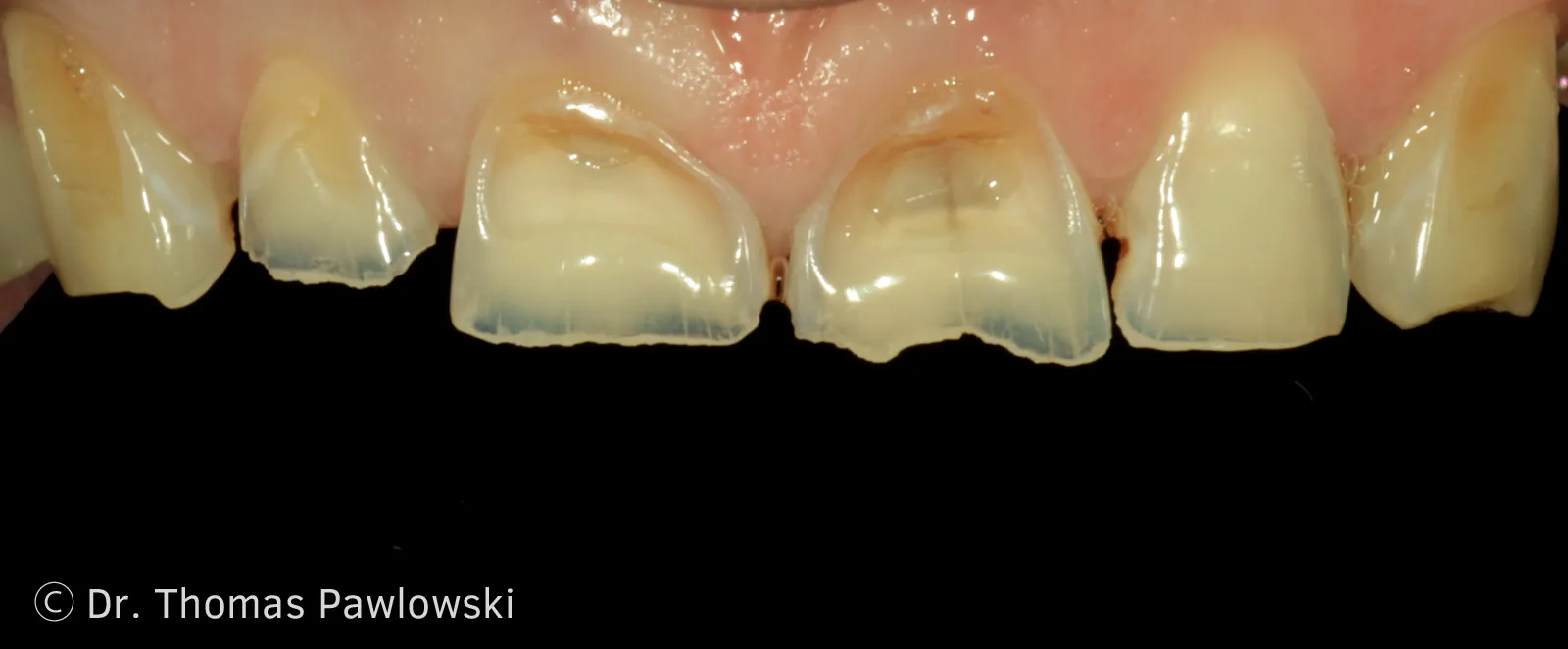
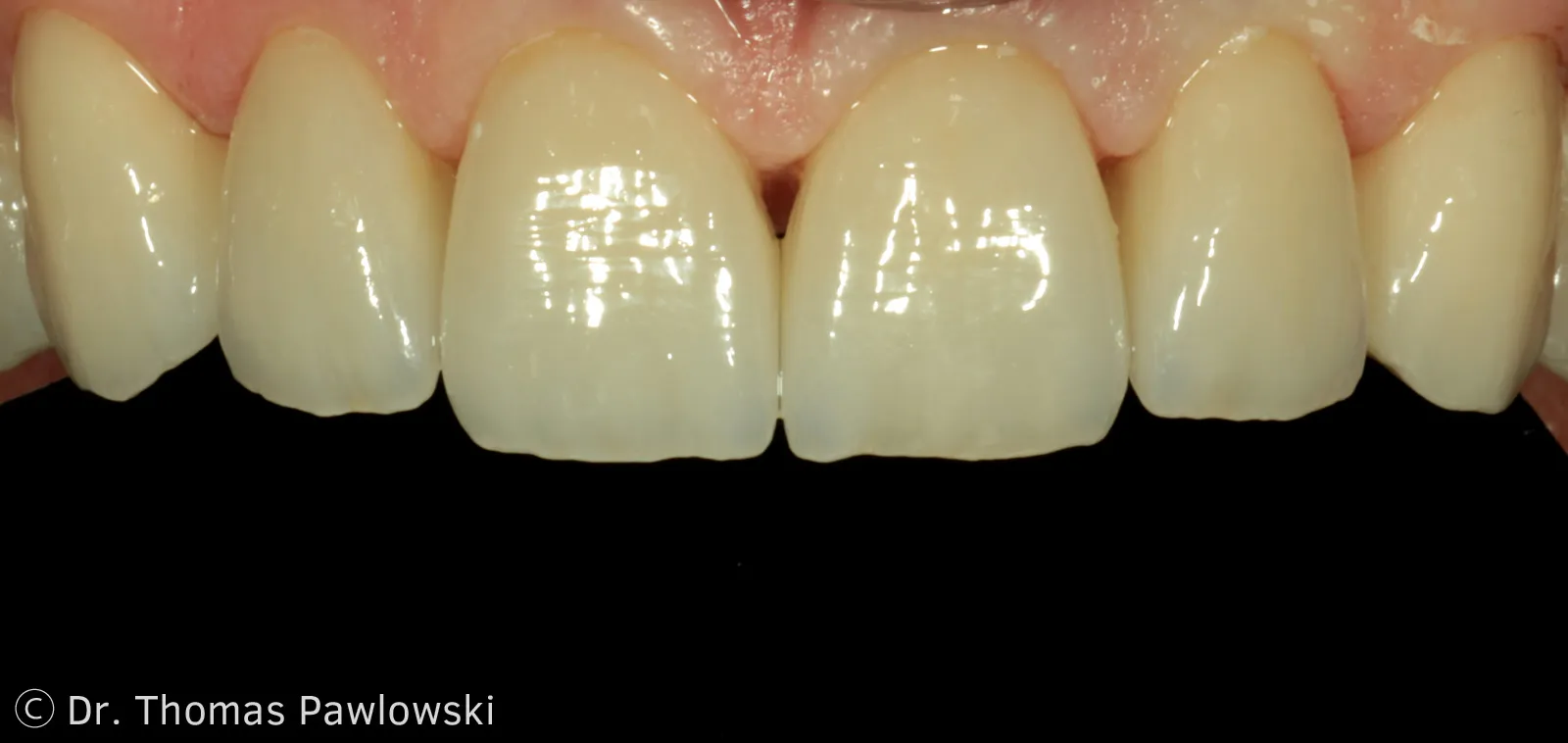
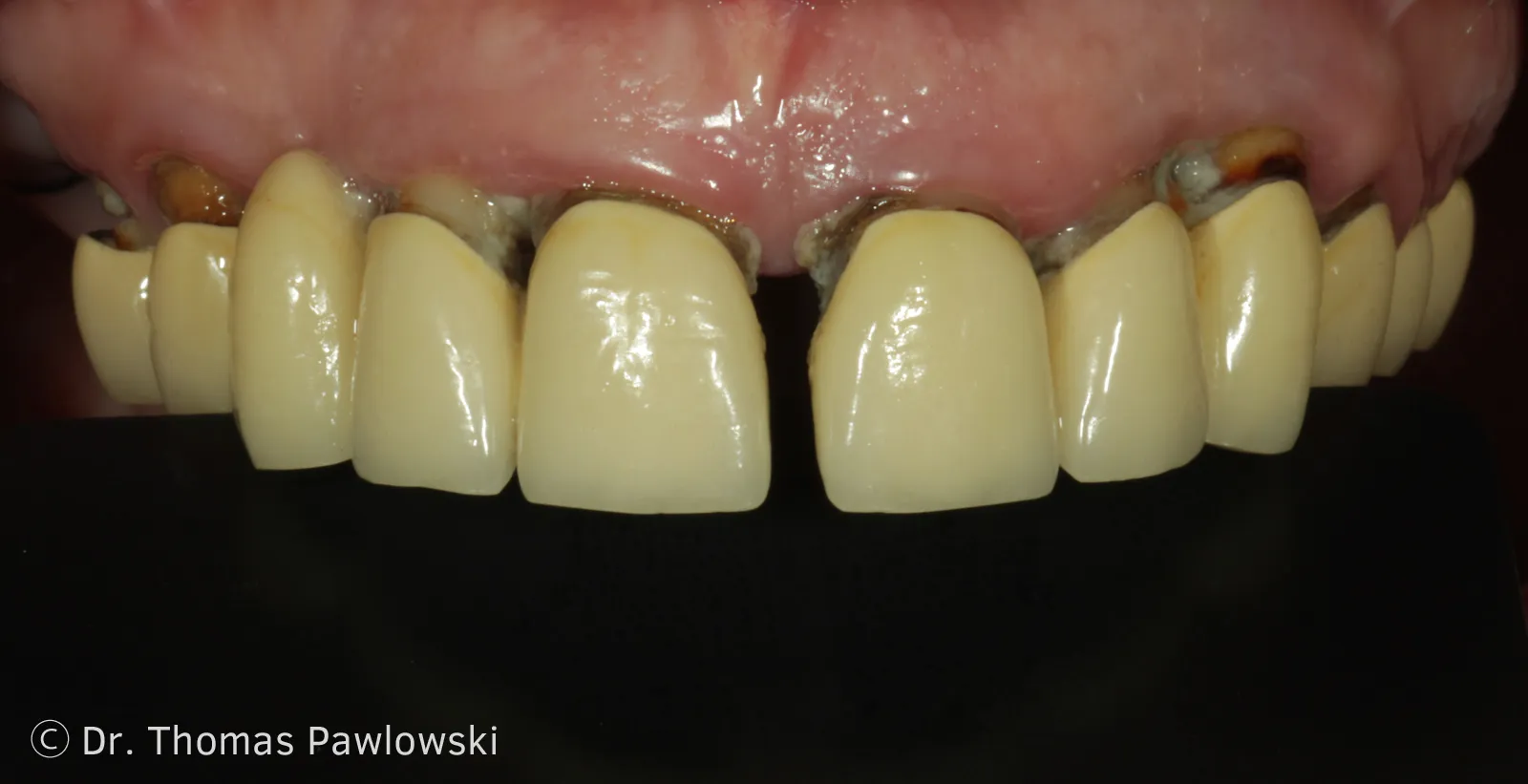
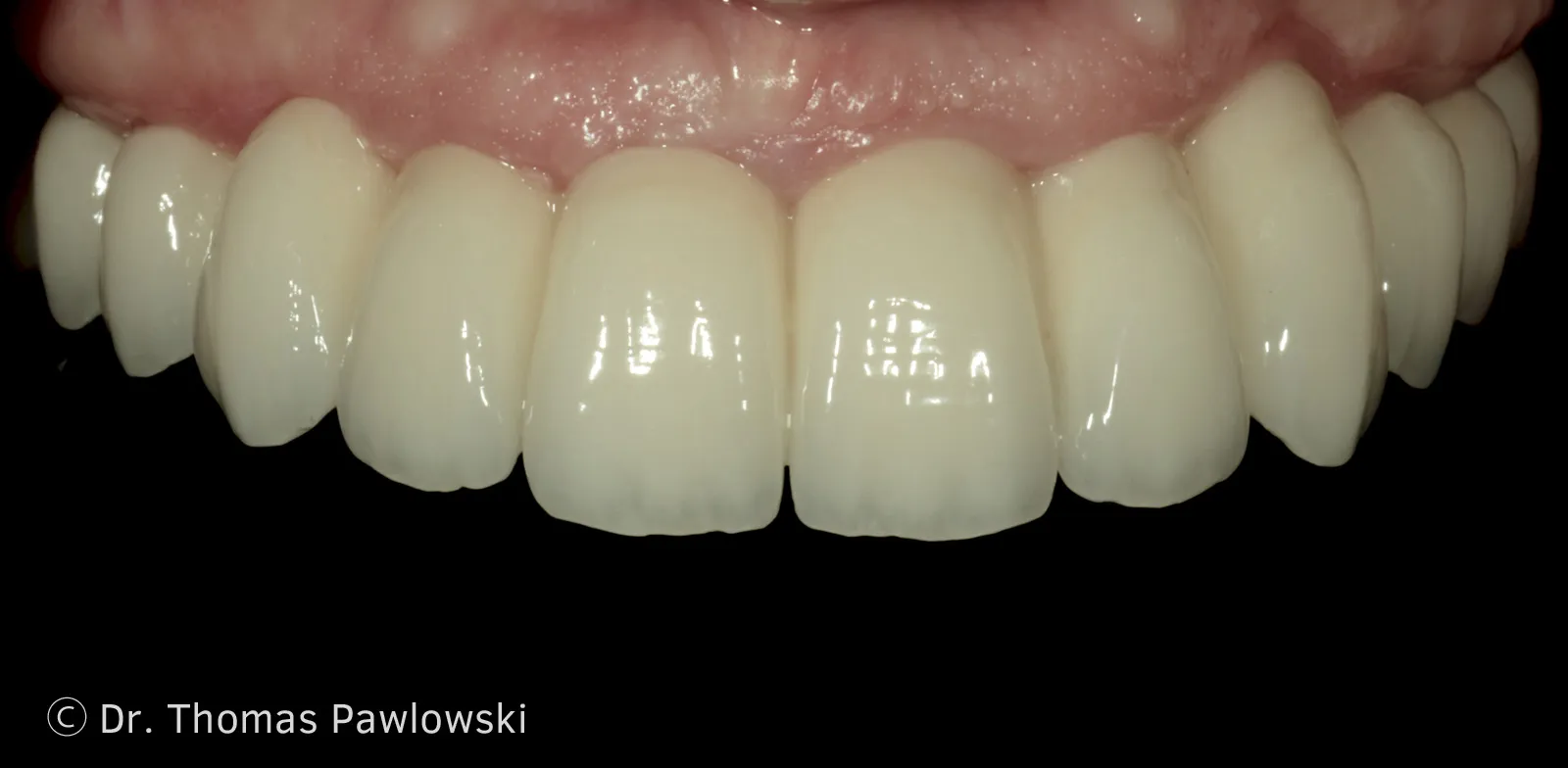
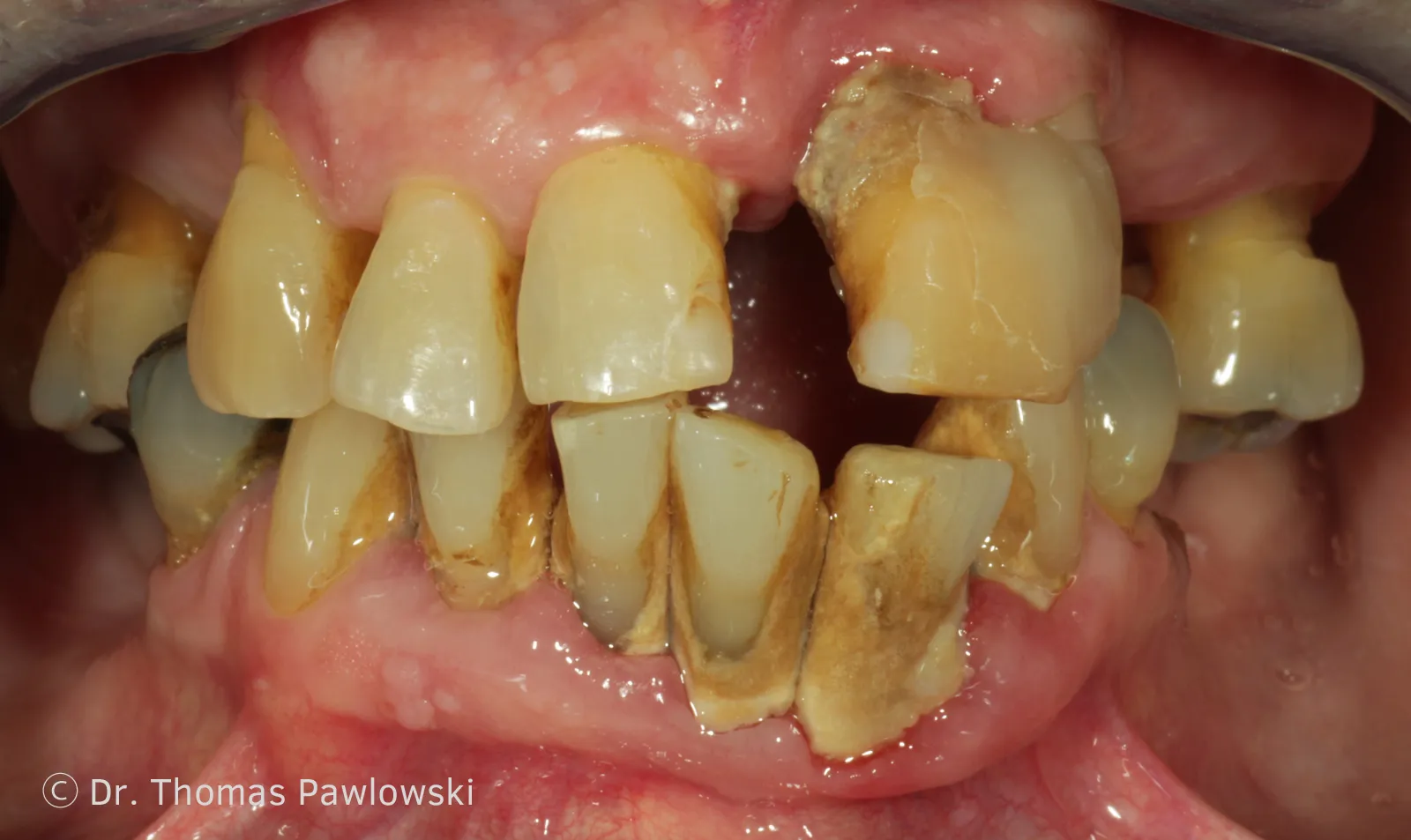
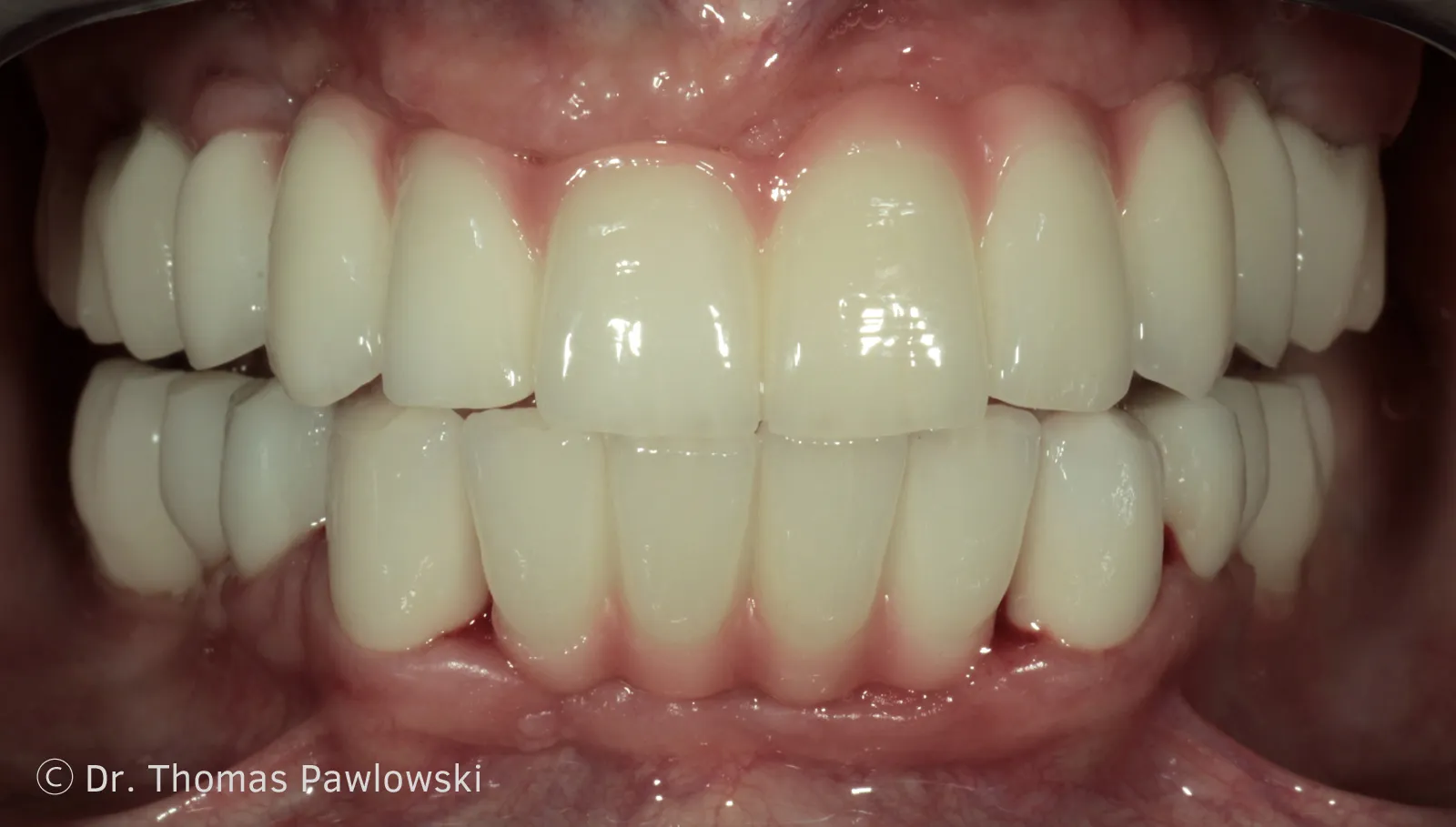
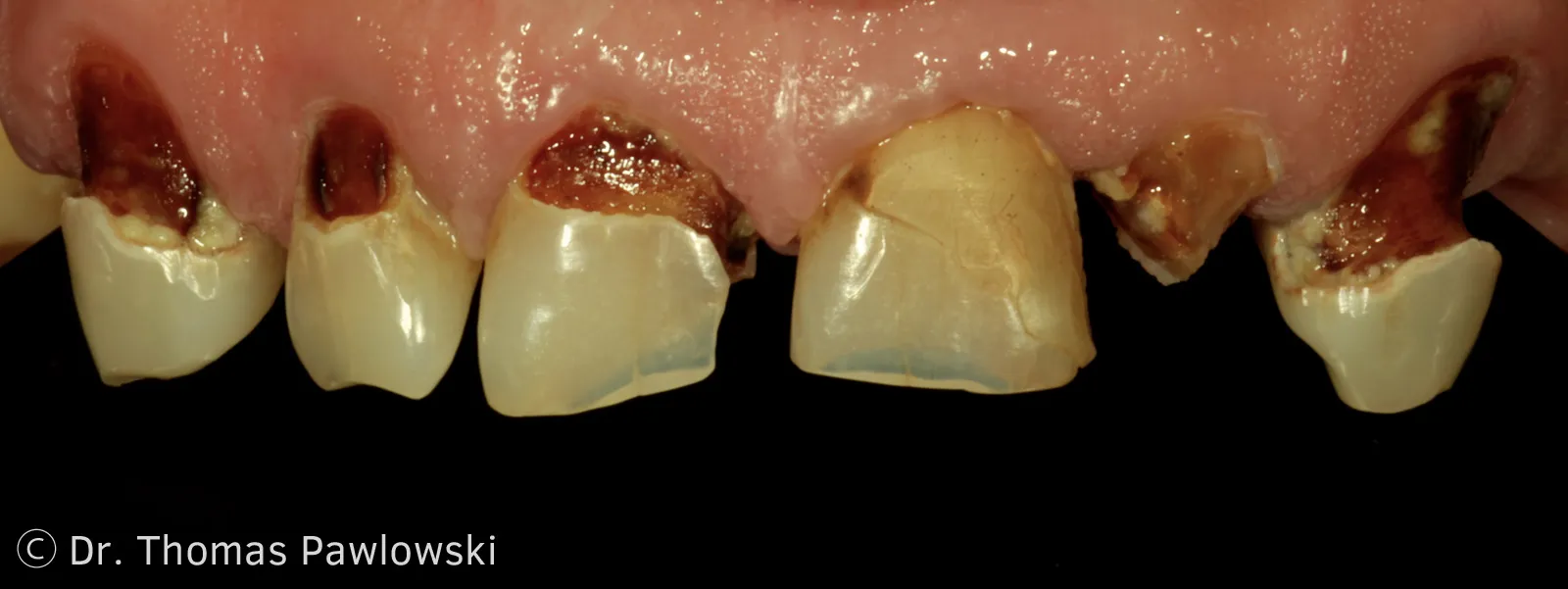
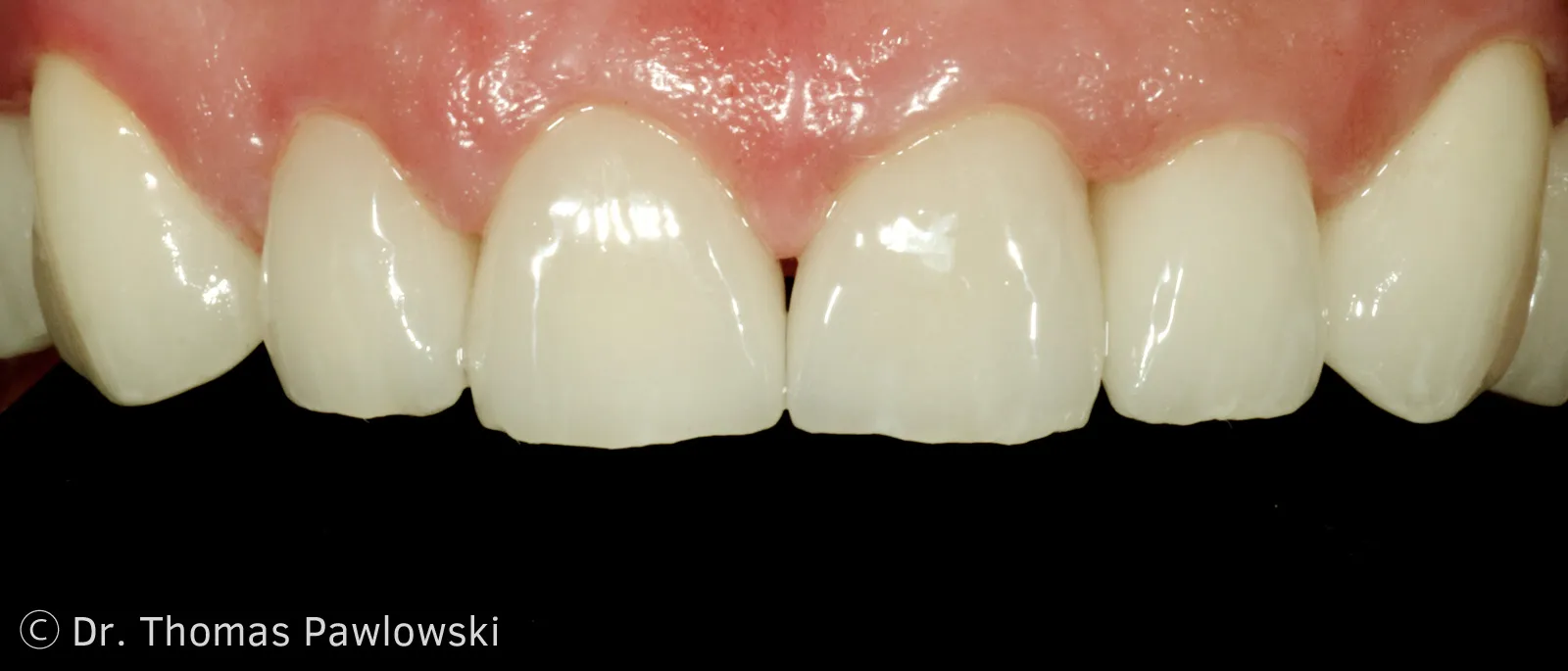
All cases shown are published with the patients' express written consent. Drag the slider to compare the treatment progression.
Treating physician
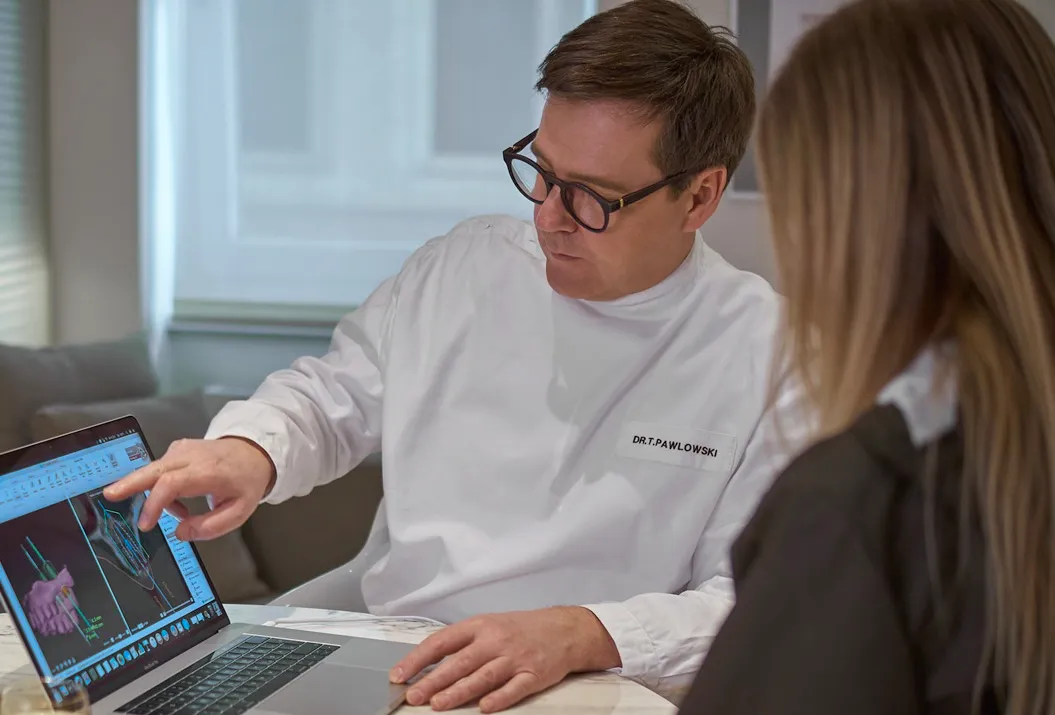
Dr. med. dent. univ. Thomas Pawlowski
Dentist · Certified implantologist (DGI)
„To provide you with the best possible, particularly gentle and pain-free treatment according to the latest standards of modern dentistry — that is our greatest concern."
In treating my patients I draw on more than 35 years of professional experience across all fields of dental, oral and maxillofacial medicine, together with long-standing specialization in implantology and certification by the German Society of Implantology (DGI). Individual attention and personal well-being are paramount in every phase of treatment.
Questions & answers.
How long does an implant treatment take?
The implantation itself usually takes no longer than 30 minutes per jaw — for a single implant often under 5 minutes, because the procedure is planned on the computer in advance and the guide transfers the plan 1:1. The subsequent healing phase typically lasts around 4 months. From implantation to the final restoration you should therefore plan at least 4 months; with more extensive preparation such as a bone augmentation, the total can extend to 10 or 12 months.
Is placing an implant painful?
Thanks to computer-navigated, template-guided placement the procedure is minimally invasive. Access to the bone is either through a punch in the gum or a small incision — without the wide flap and bone exposure used in classical implantology. A suture is usually not required. Most patients report markedly less discomfort than after a tooth extraction.
How long does an implant last?
With good oral hygiene and regular check-ups an implant is a long-term restoration. Implants with a ceramised surface support biocompatibility and long-term safety.
Are same-day implants possible?
A template-guided implantation on the same day as the first examination is not the standard case. The surgical guide is calculated from the digital planning and 3D-printed at the lab; it is available no earlier than the next day. Immediate implantation is possible but must be planned in advance.
Which crowns are placed on dental implants?
Typically full-ceramic crowns made of zirconium dioxide: high-strength, metal-free and tooth-coloured. The crowns are individually fabricated in an Austrian master laboratory and are virtually indistinguishable from natural teeth in shape, colour and light dynamics. For multiple gaps, implant-supported bridges are used. In an edentulous jaw there are two options: a complete fixed zirconium full-arch restoration screwed onto the implants, or bars serving as stable anchorage for a removable denture. For crowning individual front teeth as well, full ceramic offers the most natural aesthetics.
How biocompatible are dental implants?
Titanium allergies as such do not exist. The 10-year survival rate of titanium implants established in long-term studies worldwide is around 98%. In rare cases the immune system can react excessively — this predisposition can be clarified in advance, if needed, with a special blood test (titanium stimulation test and determination of the individual genetic tendency toward inflammation). In such cases zirconium implants are used instead.
Are dental implants possible in advanced age?
Yes. Implantation is generally possible even in patients over 80. Long-standing tooth loss accelerates bone loss in the jaw; implants stabilize the bone structure and allow fixed restorations instead of a removable denture.
Initial consultation
Let's talk.
Leave your contact details and our practice coordination will reach out shortly to arrange an appointment that works for you.
Call 01 532 3269Opening hours
Mon to Thu: 9–12 and 14–17
Appointments by arrangement.